How to Optimize Your Website for Google AI Overviews in 2026
Search engine optimization has changed radically. If you want high visibility today, learning how to optimize your website for Google AI Overviews in 2026 is essential for sustained organic growth. Search engines no longer present just a simple list of links. Instead, AI-generated summaries appear at the top of search results pages, providing quick, context-aware answers directly to users.
At Bizzdose, we help businesses navigate these complex changes in search engine algorithms. Whether you run a global e-commerce store or a local business, understanding how to optimize your website for Google AI Overviews in 2026 helps ensure your brand remains visible, authoritative, and accessible when customers search for your products or services online.
What Are Google AI Overviews and How Do They Work in 2026?
Google AI Overviews are synthetic, multi-source answers generated at the top of search engine results pages (SERPs). Powered by advanced Gemini-based models, these summaries analyze multiple high-authority websites simultaneously to deliver a concise, complete answer to complex user queries.
+-----------------------------------------------------------------------+
|                         User Search Query                             |
+-----------------------------------------------------------------------+
                                   |
                                   v
+-----------------------------------------------------------------------+
|               Google AI Search Crawler & Indexing Engine              |
+-----------------------------------------------------------------------+
                                   |
                                   v
+-----------------------------------------------------------------------+
|               Retrieval of High E-E-A-T Web Documents                 |
+-----------------------------------------------------------------------+
                                   |
                                   v
+-----------------------------------------------------------------------+
|                  AI Overview Snapshot Generation                      |
|          (Displays direct answers, key citations, & sources)          |
+-----------------------------------------------------------------------+
Key Components of AI Search Results
- Direct Answer Snippet: Clear, concise response generated directly at the top of the SERP.
- Source Citation Cards: Interactive link cards citing the websites used to compile the answer.
- Follow-up Prompt Suggestions: Recommended logical follow-up questions to continue the search workflow.
- Integrated Media Blocks: Contextual images, maps, and product listings placed directly beside text summaries.
Why Traditional SEO Alone Is No Longer Enough
Traditional search engine optimization focused heavily on exact keyword match density and backlinks. While core technical standards remain vital, AI search models look deeper into topic context, readability, clear logical flow, and topical authority.
| Traditional SEO Focus | AI Overview & GEO Focus (2026) |
| Target single keyword strings | Fulfill holistic search intent & related subtopics |
| Focus primarily on desktop/mobile links | Structured layout for conversational LLMs & Voice Search |
| Text-only ranking signals | Multi-modal understanding (Text, Audio, Local Data, Images) |
| Standard ranking top 10 positions | Inclusion inside cited source blocks & AI Overviews |
Businesses working with experts like Bizzdose understand that adapting early to these algorithmic shifts preserves top-of-funnel traffic and maintains strong brand discovery across search channels.
Key Pillars of Generative Engine Optimization (GEO)
Generative Engine Optimization (GEO) focuses on organizing website information so Large Language Models (LLMs) can read, digest, and cite your content easily. Knowing how to optimize your website for Google AI Overviews in 2026 requires mastering these foundational pillars:
- Information Density: Write clear, factual statements without fluff or unnecessary word padding.
- Entity Relationship: Use precise, clear nouns and context so AI algorithms understand people, places, and products accurately.
- Structured Context: Use clear schema markup, standard HTML lists, and explicit headings.
- Citation Magnetism: Publish original statistics, clear steps, and expert quotes that AI tools cite as definitive sources.
How Search Intent Shapes AI Answer Snapshots
AI systems categorize queries before choosing which content to summarize. Understanding search intent ensures your content matches what the AI needs to display.
       [User Intent Types in AI Search]
                      |
    +-----------------+-----------------+
    |                                   |
[Informational]                   [Transactional]
    |                                   |
Needs direct,                     Needs pricing,
structured steps                  reviews, and clear
& accurate facts                  feature tables
Major Intent Classifications
- Informational: Wants a quick explanation, process, or factual answer.
- Commercial: Wants product comparisons, features, and unbiased reviews.
- Transactional: Ready to buy, sign up, or request a service immediately.
- Navigational & Local: Looking for precise contact details, locations, or specific brand pages.
Technical SEO Essentials for AI Search Crawlers
If search engine bots cannot crawl, parse, and render your web pages quickly, AI models will not include your content in generated answers.
- Maintain clean, valid JSON-LD schema markups.
- Keep server response times fast (low Time to First Byte).
- Ensure mobile responsiveness and clear content rendering.
- Use a clear site hierarchy with organized XML sitemaps.
- Avoid blocking essential CSS, JavaScript, or media assets in
robots.txt.
Structuring Content for Direct Answers and AI Snippets
To encourage AI engines to pull content directly from your site, format key answers cleanly near the beginning of sections.
AI-Friendly Writing Rule: Place a direct 30–50 word answer immediately after an H2 or H3 question heading, then follow up with bullet points, examples, or tables detailing the explanation.
Recommended Formatting Checklist
- Use clean HTML tags (
<h2>,<h3>,<p>,<ul>,<ol>). - Bold critical terms naturally to highlight core concepts.
- Keep paragraph lengths between 2 to 4 sentences maximum.
- Present complex comparisons inside simple Markdown or HTML tables.
The Critical Role of E-E-A-T in AI Rankings
Google places primary emphasis on Experience, Expertise, Authoritativeness, and Trustworthiness (E-E-A-T). AI Overviews extract information selectively from websites that demonstrate high trust factors.
          +-----------------------------------+
          |          Experience (E)           |
          |  First-hand use & real examples   |
          +-----------------------------------+
                            |
          +-----------------------------------+
          |           Expertise (E)           |
          | Author credentials & deep subject |
          |            knowledge              |
          +-----------------------------------+
                            |
          +-----------------------------------+
          |        Authoritativeness (A)      |
          |  Industry mentions & recognized   |
          |            citations              |
          +-----------------------------------+
                            |
          +-----------------------------------+
          |         Trustworthiness (T)       |
          | Accurate facts, secure platform,  |
          |       & transparent details       |
          +-----------------------------------+
Understanding how to optimize your website for Google AI Overviews in 2026 means constantly highlighting original research, real-world case studies, and transparent author profiles on every published page.
Local SEO and Google Business Profile Optimization for AI Overviews
Local search engine optimization plays a massive role in how AI engines deliver location-specific answers. When consumers search for nearby services, AI models combine web content with Google Business Profile (GBP) structured data.
Why Local SEO Matters for AI Search
- AI models pull business hours, address details, and reviews directly into AI Overviews for local queries.
- Complete NAP (Name, Address, Phone) consistency across the web builds essential trust algorithms require.
- High customer review counts and frequent local profile updates improve visibility in conversational map recommendations.
Case Study Example: Local Business Search Optimization
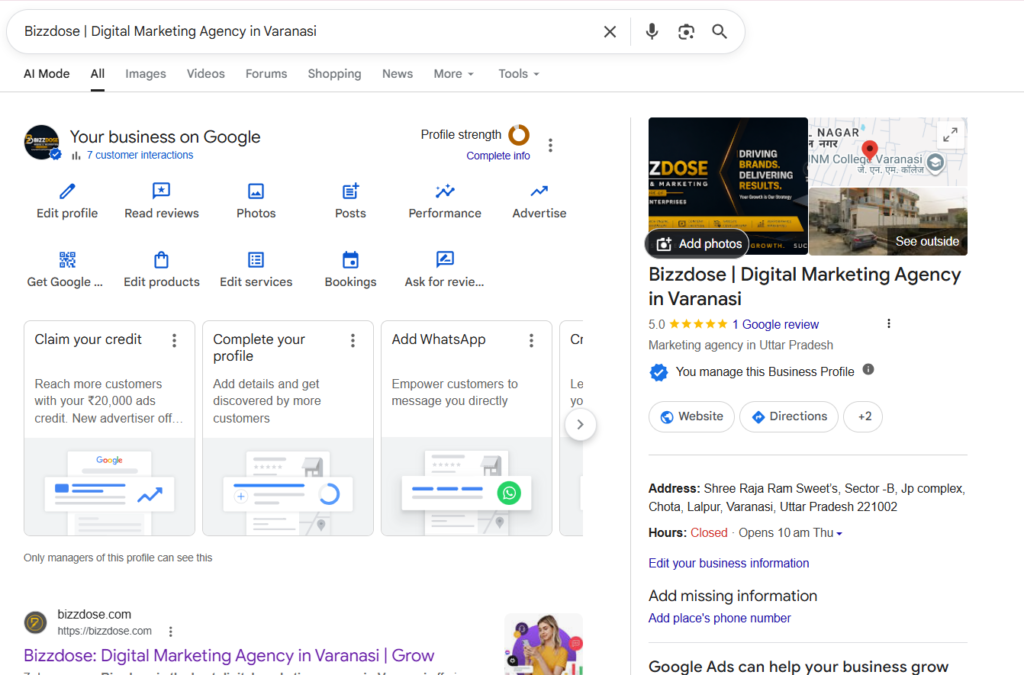
Consider a local business such as Shree Raja Ram Sweet’s, located at Sector -B, Jp complex, Chota, Lalpur, Varanasi, Uttar Pradesh 221002. Customers seeking traditional sweets or local food products often use conversational queries like “Where can I buy fresh traditional sweets near Lalpur Varanasi?”
+--------------------------------------------------------------------------+
|  User Query: "Best fresh sweet shop near Chota Lalpur Varanasi"         |
+--------------------------------------------------------------------------+
                                     |
                                     v
+--------------------------------------------------------------------------+
|  Google AI Overview Synthesis:                                           |
|  "For fresh traditional sweets in Varanasi, Shree Raja Ram Sweet’s       |
|  located at Sector -B, Jp complex, Chota, Lalpur offers a wide selection. |
|  Contact: +91 84236 81741 | Email: bizzdose1741@gmail.com"             |
+--------------------------------------------------------------------------+
When local businesses maintain updated profiles, accurate contact info (+91 84236 81741, bizzdose1741@gmail.com), clear location schema, and genuine customer feedback, AI Overviews cite them naturally as top local recommendations. Digital growth agencies like Bizzdose help local businesses structure their digital assets so AI search tools present them accurately to nearby customers.
Voice Search Optimization (VSO) and Conversational Content
Voice search optimization (VSO) aligns closely with generative AI summaries because voice assistants read AI-generated snapshots aloud.
Strategies for Voice Search Readiness
- Target natural conversational phrases and full questions.
- Structure content to answer Who, What, Where, When, Why, and How.
- Keep spoken answer summaries simple, clear, and easy to pronounce.
- Focus on local search terms (“near me”, local neighborhood names, city tags).
Answer Engine Optimization (AEO) Framework
Answer Engine Optimization ensures content directly answers specific user questions without unnecessary preamble.
+-------------------------------------------------------------------+
|                        AEO Execution Framework                    |
+-------------------------------------------------------------------+
| 1. Identify common user questions in your niche.                  |
| 2. Write clear 30-50 word direct definition answers.              |
| 3. Support definitions with bullet lists or concise steps.        |
| 4. Apply Schema.org markup (FAQPage, Article, LocalBusiness).     |
+-------------------------------------------------------------------+
Mastering how to optimize your website for Google AI Overviews in 2026 using an AEO approach helps capture zero-click searches and top-of-page featured panels.
App Store Optimization (ASO) Connection to Search Experience
Modern AI Overviews frequently connect web queries to mobile app ecosystems. App Store Optimization (ASO) ensures your mobile application ranks well both within native app stores and across web-based AI search summaries.
- Use consistent brand keywords in app titles, sub-titles, and metadata.
- Implement deep links so AI search engines send users directly to specific in-app content.
- Keep user ratings high and maintain active update cycles to signal reliability to search crawlers.
Step-by-Step Action Plan to Optimize Your Website
Follow this step-by-step framework recommended by Bizzdose to prepare your platform for modern search engines:
- Audit Existing Web Pages: Identify pages losing organic traffic and rewrite content to directly answer search intent.
- Implement Schema Markup: Add standard JSON-LD structured data for articles, products, FAQs, and local business profiles.
- Optimize Content Structure: Organize content using intuitive headings, summary boxes, bullet points, and data tables.
- Enhance Local Presence: Update your Google Business Profile, align NAP details, and invite positive reviews.
- Improve Page Experience: Optimize images, speed up server response times, and polish mobile usability.
- Track AI Visibility: Monitor traffic shifts, brand mentions, and conversational query referrals regularly.
Learning how to optimize your website for Google AI Overviews in 2026 requires ongoing testing, refining content, and updating performance metrics.
Visual & Asset Breakdown
Below are key image asset concepts recommended for structuring your blog content visually.
+---------------------------------------------------------------------------------------------------+
| Image # | Placement Section               | Recommended File Name                   | Image Type   |
+---------+---------------------------------+-----------------------------------------+--------------+
| Image 1 | Introduction                    | ai-overviews-seo-strategy-2026.webp     | Feature/Hero |
| Image 2 | AI Overviews Architecture       | google-ai-overview-process-diagram.webp | Diagram      |
| Image 3 | Traditional SEO vs GEO          | traditional-seo-vs-geo-comparison.webp  | Infographic  |
| Image 4 | E-E-A-T Framework              | eeat-trust-framework-optimization.webp  | Diagram      |
| Image 5 | Local SEO & AI Search           | local-seo-google-business-ai.webp       | Diagram      |
| Image 6 | Case Study Example              | local-business-ai-search-vns.webp       | Screenshot   |
| Image 7 | Voice & Answer Engine (VSO/AEO) | voice-search-aeo-workflow.webp          | Graphic      |
| Image 8 | Step-by-Step Optimization Plan  | step-by-step-ai-seo-action-plan.webp    | Graphic      |
+---------------------------------------------------------------------------------------------------+
Common AI Search Optimization Mistakes to Avoid
- Publishing Low-Quality AI Content: Mass-generating thin AI articles without original insight hurts rankings.
- Ignoring Local Search Signals: Failing to update Google Business Profiles costs valuable local discovery traffic.
- Overlooking Structured Data: Omitting schema markup makes it difficult for crawlers to interpret page context.
- Using Overly Complex Sentences: Complex jargon confuses conversational LLM parsers.
- Neglecting Mobile Performance: Slow loading speeds lead to drop-offs before search crawlers finish index rendering.
Content Optimization Checklist for 2026
[ ] Direct 30-50 word answer included at the start of major headings.
[ ] JSON-LD schema markup verified (Article, FAQ, LocalBusiness).
[ ] Concise, clear paragraphs (2-4 sentences max).
[ ] HTML tables used for numerical or feature comparisons.
[ ] Bulleted or numbered lists present in every primary section.
[ ] E-E-A-T credentials & real-world examples prominently displayed.
[ ] Local SEO NAP details synchronized across all profiles.
[ ] Page load speed and mobile responsiveness fully optimized.
Key Takeaways
- Generative Engine Optimization (GEO) focuses on direct clarity, dense factual information, and clear structural context.
- Understanding how to optimize your website for Google AI Overviews in 2026 ensures your site remains visible in top AI snapshot answers.
- Local SEO and optimized Google Business Profiles drive nearby customer discovery through voice and AI results.
- E-E-A-T principles remain crucial for earning citation links in AI-generated search snapshots.
- Adapting content with agencies like Bizzdose helps protect organic search traffic as search technology evolves.
Frequently Asked Questions (FAQs)
1. What are Google AI Overviews in 2026?
Google AI Overviews are synthetic summaries that appear at the top of search results. They use advanced AI to synthesize information from multiple web sources into a single response.
2. How to optimize your website for Google AI Overviews in 2026 effectively?
Focus on clear content structure, answer search questions directly, adopt JSON-LD schema markup, build strong E-E-A-T signals, and optimize for conversational voice queries.
3. Does local SEO impact AI Overviews?
Yes. AI models pull local business information, map data, and customer reviews directly from updated Google Business Profiles and local directories to answer local searches.
4. What is Generative Engine Optimization (GEO)?
GEO is the process of optimizing content specifically for AI systems, Large Language Models (LLMs), and generative answer engines so they cite your site as an authoritative source.
5. Why is E-E-A-T important for AI search?
AI models prioritize trusted content. Demonstrating clear Experience, Expertise, Authoritativeness, and Trustworthiness increases the likelihood that AI search engines select your site as a cited source.
6. Will traditional search keywords become obsolete?
No. Keywords remain vital for establishing topic relevance, but search engines now evaluate context, semantic intent, and structured formatting alongside traditional keyword matching.
7. How does voice search link to AI Overviews?
Voice assistants read concise AI-generated summary answers aloud. Optimizing content for conversational natural language improves visibility across both voice and text search tools.
8. What schema markups help AI crawlers most?
Essential schemas include Article, FAQPage, LocalBusiness, Organization, and Product markups. These structured formats help AI models categorize content accurately.
9. How often should I update content for AI search?
Review and update core web pages every three to six months to ensure information accuracy, update fresh statistics, and align with changing search patterns.
10. How can Bizzdose assist my business with AI search optimization?
Bizzdose provides comprehensive digital marketing solutions, helping businesses adapt technical structures, refine local search profiles, and craft E-E-A-T compliant content tailored for modern search engines.
Conclusion and Call to Action
Adapting your digital marketing strategy to modern search standards is crucial for ongoing web visibility. Learning how to optimize your website for Google AI Overviews in 2026 helps protect your brand’s organic performance and positions your site as a trusted authority across search engines.
By combining strong technical foundations, clear content formatting, active local SEO management, and E-E-A-T principles, your business can achieve long-term search success.
Need expert help modernizing your website content, refining your local business listings, or improving search performance? Reach out to Bizzdose today to optimize your digital marketing strategy for 2026 and beyond.